Thursday, December 19, 2013

Elks'-Wyandot's "Long Goodbye"- The Saga of a Lost Donald Ross Classic


Chapter  2:    POMP AND  CIRCUMSTANCE


The  spring  of  1921  found  the  members  of  Elks  Lodge No. 37  in  an  uproar. Rumors  were  rampant  that  the  lodge's now  "Past  Exulted  Ruler"   John  W.  Kaufman  was  scheming  to  start  a  country  club for  the  members,  and  was  negotiating  to  buy  land  on  Columbus's  north  side expressly  for  that  purpose.   But  Mr. Kaufman  stayed  close-mouthed  about  his  plans,  only  keeping  the other  lodge  officers  in  the  loop.   There  was  good  cause  for   keeping   things  close  to  the  vest.  While  Kaufman  felt  certain  he  could  obtain  the  100  acre  Higgins  farm  (complete  with  the  house's  silverware  and  china  and the  farm's  livestock  and  thoroughbred  chickens),  he  knew  the fledgling country  club  would  eventually have  need  of  four  other  adjoining parcels,  all  owned  by  different  individuals,   in  order  to  feature  an  18  hole  golf  course.   The  wily  Kaufman   did  not  want  the  owners  of  these  four  parcels  to be  tipped  off  that   their  land  was  indispensable  to  that  goal.  So  when  in  late  April,   he  announced    to  the  surprised  and  pleased  Elks  members  that  he  was  arranging   to  purchase  the  Higgins estate  and  convert  it  into  a  country  club  for  the  BPOE,  Kaufman   softpedaled  things  by   leaving the   impression  that   BPOE  would  have  all  the  land  it  needed  by  that  purchase alone.   The  press  was  informed   that  the  Higgins  farm   was  sufficient  for  the  Elks'  purposes  since
  " there  was  room  for  a  nine  hole  golf  course, tennis  courts,  and  a  baseball  diamond."
                                
Seizing   on  its   opportunity  to  publicize  the  new  country  home  of  the  Elks,  BPOE  scheduled  a  dedication  ceremony  at  the  property  for    May 28, 1921.  By  that  time,  the  Higgins  transfer  was  accomplished,  and  Kaufman  had   inked  an  agreement  for  BPOE  to  buy  the  critical  64  acre  Smith  property.  Acquisitions  of  the   31  acre  Dell  and  13  acre  Fink  parcels  were  not  concluded  until   July  23rd.  Finally,  BPOE  would  have  enough  land  to  construct  18  holes!  The  final  piece  of  the  country  club  puzzle,  the  46  acre  Samples property,  was  not  in  BPOE  hands   until  April  22,  1922.

While  Kaufman  busied  himself   in  mid-May  with  the  various  details  of  getting  the  Elks   Country  Club  off   the  ground,   golf's  most  renowned   architect  was  working  just  a  few  miles  away.  The  Aladdin  Golf  Club  had  engaged  Donald  Ross  to    stake  out  a  re-design  and  expansion of   its  existing  nine hole  course.  Aladdin,  a  Ross  gem  now   lost  to  the  sands  of  time,  was  located  at  First Avenue  and  Arlington  Avenue  in  the  Grandview  area.  Ross  expressed  confidence  that   Aladdin, "would  be  a  splendid  test of  golf when  completed,"  and  that  "on  no  hole  will it  be  necessary  to  play  over  a  railroad  or  traction  tracks,  which  at  present  intercept  four  fairways in  the  nine  holes  now  in  use."   Ross was  feted  at  a  dinner  at  Aladdin  the  night  of  May  16th.   Since  this  visit  was  noted  by  the  Ohio  State  Journal ("OSJ"),   Kaufman  certainly  got  wind  that  the  architect  was  in  town.  Less than  one  year  later,  Ross  would  return to   Columbus  to  work  on  another  project!

The   dedication  of  the  property  was  front page  news  in  all  three of  Columbus's  daily  newspapers.  The  "Committee  of  Arrangements"   with   John  W.  center-stage,  merited  a  front  page  photo  in  the  OSJ.  Messrs.  Hanby  Jones,  John  Ward,  John  W.  Kaufman,  Robert Wolfe, and  John  Price,  sporting  varying  chapeaus,  struck  a  serious  vein  for  the  image.

                                               
It was  duly   noted  in  the Sunday  Dispatch that  Elks  Lodge  No.  37   was  the  first  in  the  country  to  "acquire  a  country  club as  an  adjunct  to  the  regular  lodge   home."  The  ceremony  was  staged  on the  lawn  surrounding  a  new  flagpole  in the  center of    what  was  described  as  an  "outdoor  lodge room"   specially  prepared  for  the  event.  Kaufman  called  upon   former  Governor   and  fellow  Elk  James  Campbell  to   address  the  assembled  throng  of  over  300.  Resplendent  in  his  white  suit,  Campbell  complimented  the  local  lodge  on  its  civic  involvement  in  Columbus.  He  paid   kind  tributes  to  the  work  of  Mr.  Kaufman  and  his  committee  in  securing  the  Higgins  estate.  Elks  dedication  rituals  followed.   The  keys  to  the  new  "country home"  of  the  lodge   were  presented  to   John  Kaufman  who  made  a  brief  but  heartfelt  address.  The  Ohio  State  Journal  mentioned   that  a  "social  air  was  given  to  the  performance  by  the  presence  of  more  than  100  women,  who  appeared  in  summery  dresses and  added  color  to  the  scene."


               Former  Governor  James   Campbell  addresses  the  BPOE
                                            at  the  dedication

Then  the  big  moment arrived!  Master  John  Altmaier,  the  four  year  old  grandson  of  John  Kaufman,  was  entrusted  with  the  task  of  raising  the  new  club's  immense  American  flag  up  the  flagpole.  The  Journal,  with the  hyper-drama  typical  of  newspaper  accounts  of  the  time,   reported  that,  "A  shaft  of  golden  sunlight,  breaking  through  a  heavy  cloud,  shimmered   on  the  American  flag as  it   rose  to  the  top  of  the  flag  pole... The  Elks'  chorus  broke  into  the  strains  of  "The  Star  Spangled  Banner" as  200  Elks  uncovered  and  saluted  the  flapping  banner.  There  was  silence,  and then  an  outburst  of  applause...It  was  during  the  flag-raising  that  the  assembled  Elks  first  experienced  the  'at-home'  feeling."

Young  Master  Altmaier's  picture  graced  the  front  page  of  the  Sunday  Dispatch  just  under  the header (see  below).  Outside  of  a  royal  baby,  the  four  year  old  (he  looks  like  a  toddler  of  two  in  the  photo)   had  to  rank  as  one  of  the  youngest  lads  ever  to  land  on  page one.  As   I  viewed  this  archive,  it  occurred  to  me  that  there  was  at  least a  remote  possibility  that John  Altmaier  was  still  alive,  albeit  well  into  his  90's.  Wouldn't  it  be  cool  to  interview  someone   that  figured  in  an  event   that  occurred  92 years  ago?   So  I  googled  the  name  of  "John  Altmaier"  in  Columbus.  I  was  blown  away   when  the  search  came  back with  information  indicating  the  presence  of  a  gentleman  by  that  name, age  96,   purportedly  residing  on  Brookside  Drive  in the  Columbus  suburb  of  Bexley!  Telephone  inquiries  were  unavailing,  so I  wound up  knocking  on  the  door  at  the  address  provided  by my  internet  surfing.  A  kindly  lady  answered  the  door.  I  asked  if  John  Altmaier  still lived  there.  She  smiled and  replied  that  Mr.  Altmaier had  passed  away  twenty  years  previously.  However,  John's  widow  Elaine,  was still  very  much  alive,  but  she  was  away,  summering  in the  Upper  Peninsula.  The  lady  was  nice  enough to  provide  Elaine  Altmaier's  telephone  number,  and  I  called  her.  She  was  very  sharp.  Elaine confirmed  that her deceased  husband  was  indeed   the grandson  of  John  W.  Kaufman.  When  I  asked  her  about  John's  front- page picture   on  the  May  29, 1921  Sunday  Dispatch,  she  laughed,  and  indicated  that  John  never  once  mentioned it  to  her  in  their  long  marriage.  Given  his  tender years  at  the time,  he  may never   have  been  made  aware  of  the  picture  or  his  role  in  the  dedication  ceremony.  I  asked  if  her  husband  ever  became  an  Elk  or  played  golf  at  Elks- Wyandot.   She  replied that   he  did not.  "John  was  a  tennis  player!"   While  she  could  not  tell me   much   about  Elks-Wyandot,  Elaine  provided  very  helpful  information  regarding  the  Kaufman  business  interests.   Her  late  husband  was  employed  with   the  Columbus  Coated  Fabrics  portion  of  the  family  conglomerate,  having   risen  to  the  vice-presidency of  that  company.


By  the  time  of  the dedication,   Kaufman,  in  consultation  with   the  new  Grand  Exulted  Ruler  of  Lodge  No.  37  William  Abbott,  had  determined  that  John  R.  Downey  would  serve  as  manager  of  both  the  city  and  country  houses  of  the  Elks.  In  short  order,  Downey  found  the  man  he  thought  had  the  stuff   to  be  a  good  greenkeeper  even  though  he  was  short  of  experience  in  the  area   (to  be  expected  because  greenkeeping  was  a  new  profession  in  the U.S.).  There  was  only  one  problem:  Lawrence  Huber  was  unmarried,  although  he  was  smitten  with  young  Eunice  whom  he  squired  about in  the  small  town  of  Alton,  just  west  of  Columbus.  In  the  interview,  Downey  advised  Lawrence  in  no  uncertain  terms  that  the  BPOE  would  much  prefer  a  married  man  to  be  living  in  the  caretakers'  home  adjacent  to  the  planned  course.  That  would  eliminate  gossip  concerns etc.


Lawrence  probably  took  all  of  five  seconds  to  respond,  "No  problem,  Eunice  and  I  will  get  married  right  away!"  And  so  they  did.  The  Elks  had found  their  greenkeeper.  Lawrence  Huber  would  be  the  one  constant  at  Elks-Wyandot  for  the  next  20 years.


                          Lawrence  and  Eunice  Huber


But  the  BPOE  still  needed  to  design  and  build  its  golf  course.  John  Kaufman  wanted  the  best.  That  could  only  mean  the    firm  of  Donald J.  Ross  and  Associates,   and  its  eponymous  founder.  It  is  a  fact  that  there  are  numerous  Ross  designs  upon  which  he  never  set  foot,  instead  working  from  his  office  in  Pinehurst,  North  Carolina  formulating  his  blueprints  from  topographical  drawings.   Presumably,  if  you  wanted  the great  man  to  stake  the  course  personally,  you  paid  a little  extra.  But  John  W.  perceived  that  Ross's  presence on-site  would be  well  worth  the added  expense.   Besides,  the  Masons  had  Ross  stake  their  Aladdin  course.   Kaufman's  Elks  were  not  about  to  take  a  backseat  to  any  social organization  in  town!

An  excited   welcoming  party,  including  John  W.  and  son  Harold,  nervously  paced  the   depot  platform  at  Columbus's  Union Station   on  April  27, 1922.  Many  thoughts  had to  be  going  through  their  respective  minds.  What  would  Ross  think  of  the  property's  suitability  for  a  golf  course?   Was  he  going  to  utilize the   land's picturesque wooded  ravine   for  some  of  the  holes?  Or  was  the  valley  too  wide?  


Next  chapter:  "The  Great  Man  Arrives"
Acknowledgements:  Interviews  with  Elaine  Altmaier,   Betty  Huber  and  Jim  Huber  (daughter-in-law  and  son  of  Lawrence  Huber);  photos  from  Betty  Huber;  Shirley  Hyatt, newspaper  archives  from  Columbus  Citizen,  Ohio  State  Journal,  and  Columbus  Dispatch  housed  at  the  Columbus  Metropolitan  Library.  Many   thanks  to  the  various  librarians  there  who  helped   me with retrieval.  


Monday, December 16, 2013

Elks'-Wyandot's "Long Goodbye"- The Saga of a Lost Donald Ross Classic - Introduction and Chapter 1


 Central  Ohio  golfers  never tire  debating the  relative  merits  of  the  many  great  courses in the area.  Jack  Nicklaus's  Muirfield,  University  Scarlet,  Double  Eagle,  The Golf  Club,  Brookside,  Columbus, The  Lakes,  Champions,   and  naturally   the  iconic  Scioto,   have  their  devotees.  But  players   who  had  the good  fortune to  strike  their brassies  over   the  long -vanished  Elks-  Wyandot  Country Club  course  could  argue  with  some  justification   that  this  beloved  Donald   Ross   beauty  was the  finest  of  all.

From  its  ballyhooed opening  in  1923  until  its sad  and  final closing  after  the 1952  golf season,   the  course   (and  the  country  clubs  associated  with  it-  Elks  and  Wyandot)     faced  daunting  challenges.   While the  course  overcame  the  hardships  of  the Great Depression,  a  disastrous  fire   that  burned   the clubhouse  to  the  ground,  and  World  War  II,   it ultimately  could  not  survive   a  political  struggle  with  the State  of   Ohio   despite  the  best  efforts of   Mayor of  Columbus  Jim  Rhodes  (later  four-time  Governor  of  Ohio)  to  save  it.

My  interest  in  the  history  of  Elks'-Wyandot came  about  when  I  noticed  errors  in  the  Donald Ross  Society's  (I  am  a  member)   list  of   his  designs.  First,  it  indicated that  "Elks  Country  Club,"   built  in  1923 in  Worthington,  Ohio  (a  Columbus  suburb)  was  still   in existence.  I  knew  that  there  was  no  course  by  that  name  currently  in  existence.   Second,  the   list  identified "Wyandot  Golf  Course"  in  Centerburg  (a  much  further  away  suburb)  as  a  Ross  course  constructed  in  1922  and  closed  in  1952.  To   the  contrary,    Ross could  not  have served  as  architect  for  this  little  country  course   since it  opened  after  I  moved  to  Columbus in  the 70's-  decades  after  Ross's  death.  Furthermore,  that  course is  still in  operation.

 So  this  misinformation  piqued  my  curiosity,  and   I  embarked  on  what   can  best  be  described as a "research  adventure."  In  short  order,  I    confirmed   some  basic  facts.  The  "Benevolent  and   Protective  Order  of  Elks, Columbus  Lodge No,  37" ("BPOE  or  "the  Elks")  acquired  265  acres  of  property  bordering  on  Morse Road  and  Indianola  Avenue   in   the  Clintonville  area  of  Columbus   in  1921,   The  Elks  retained  famed  architect  Donald  Ross  to  design  a  golf  course  on  the  property.  It  was  opened  for  play  in  1923.    "The  Elks'  Country  Club"  owned  and  operated  the facilities  until  1931  when  the  course  name  changed  to    "Wyandot  Country  Club."  The  course  closed for  good   in  1952.  The  facilities  of  the  State  of  Ohio  School  for the  Deaf  now  occupy the   area  where the  Elks'- Wyandot clubhouses  once  stood.   The  School  for  the  Deaf  is  accessible  from  Morse  Road  over  roughly  the same  driveway  that  was  used  to  access the  clubhouses  many  years  ago.  The  State  of  Ohio's  School  for  the  Blind  occupies  the  northwest  portion  of  the  property  across  a  deep and  forested  ravine  that  effectively  separates  its  campus from  that  of  its  sister  school .  The  School  for  the  Blind  is  accessible  from  High  Street,  which  is  Columbus's  principal  north-south  artery.

But  I  wanted   to  know  more!  Like,  what  led  The  Elks  decision to   acquire this  large  property and  build  a  golf  course?   Was  Donald  Ross  on-site  during  construction  (often  he did not  see  courses  he  designed) ?  Could  I  obtain  any  information about  the  course  lay-out  or  details  about   Ross's  bunkering?   Why  did  the club  name  change  to  Wyandot ?   Did  The  Elks  give  it  up,  and  if  so- why?  How  good  was  the  golf  course?   Did   players  of  distinction  in  local  circles   play  their golf  there?   Is  anyone  alive  who  can  remember   the  course,  let  alone  have  played  it?   What  were  the  circumstances  that  led  to  its  ultimate  closing   and  acquisition  by   the  state?

I  was  able  to  answer  these  questions.   I  pieced  together  the  history  of  the  course  by   spending   many  hours   buried  in  the microfilm  archives  of  Columbus  newspapers.  I  walked  the  property   and  found  remnants  of  the  old  course.  Internet  searches  unearthed  many  informative   tidbits  concerning   the  club's  founders,  members,  and  staff  that  helped  flesh  out  the story.  I  acquired  a   program  for a  big  PGA  tour  event   played  at  Wyandot  in  1948-  The  Columbus  Invitational.   A  visit  to  the  county  courthouse   uncovered  a  1938   aerial  photo  of  the  course  which   revealed  much  about  Ross's  routing as  well as  many  of  Ross's  architectural  details.   Most  gratifying  of  all  was  my  opportunity to  reminisce with  folks  who  were  of  a  certain  age  that  they  could  recall  the old  course,  and  relate  anecdotes  about the  people   associated  with  it.   One  visit  in  particular  resulted  in  discovery  of  a  treasure  trove  of  photographs  and  other  artifacts.  Now,   let  me  tell you  the story  of   Elks'- Wyandot.


                         Chapter  1:       THE  FOUNDING  FATHER


To  merely   label   John  W.  Kaufman   an  entrepreneur  would  do  him an  injustice.  He  was  much  more.   From  approximately  1900  until  his  death  in  1933,   he  was  a   colossus  of  Columbus's   burgeoning   business  community.  Mr.  Kaufman  was  responsible for   founding  or  acquiring  an  array   of   quarrying  and  manufacturing  operations   that  under his  leadership  mushroomed  into  major  league enterprises.  He  embodied  the  rags  to  riches  "Horatio  Alger"    success  story   that  inspired   youths  of  the  era.

His  career  began  juggling  two  low-level   jobs.  During  the  day,  he  clerked for  the  Reinhard  Bank  in  downtown  Columbus.  He  moonlighted  as  an  assistant  bookkeeper  for  the  Godman  Shoe  Company.  He  impressed  the  latter  employer  well enough  that  he  was  steadily  promoted   through  the  ranks  until  he  became  the  firm's  part-owner  and secretary.  After  reaching  age   40  in  1906,  Mr.  Kaufman  upped  his  entrepreneurial   activities.  Anticipating  that  the  city  was  about  to   embark  on  a  growth  spurt  that  would  necessitate   an  increased  need  for  building materials,  he  along  with  several  of  his  siblings,  purchased   the  Woodruff  and  Pausch  Company,  an  operation   mining  limestone  adjacent to  the  Scioto River  on  Columbus's  northwest  side.  The  investment  went  well,  and  in  short  order,  the Kaufman  interests  also  swallowed up  the  Casparis  Stone  Company.  The resulting  merged  company  became  known as  the  "Marble  Cliff  Quarry Co." -  a vast  operation  covering  over  2,000  acres.  And  Mr.  Kaufman  proved  to  be  spot-on  in  his  assessment  that  Columbus  would  need  his  product.  Limestone  mined  from  the  quarry  was  used  in  the  construction  of  Ohio  Stadium,  the  47  story  American  Insurance  Union  Citadel  (now the  LeVeque  Tower), the  city  airport,  and  area  freeways.  In  time,  the   Kaufmans,  with  John  leading  the family's  efforts,  acquired many  other mines  and  quarrying  operations   in  the  United  States  and  Canada.

Most  would  have  been content  with  such  success.  But  not  John  Kaufman!   On  behalf  of  the   family,  he  launched  investments  in   the  Claycraft  Mining  and  Brick  Company in Columbus  and  the  Ohio  Steel  Foundry  in  Lima.    He  started   Columbus  Coated  Fabrics,  which  became  the  industry  leader in  manufacture  of vinyl-coated  cloth  products.  Given  Mr.  Kaufman's  far-flung  business  interests,  it would have  understandable if  he  had   failed  to  pay much  attention  to  civic  endeavors.  But,  as  the saying  goes,  "If  you  want a  job  done,  give  it  to  a  busy  person!"  and  John  Kaufman was  always  there to  lend  a  hand.  He  raised  enormous   funds  for  the  World  War  I  "war  chest  drive."    He  supported   "Charity  Newsies,"  a  local  charity   still  providing  clothing to  underprivileged   children.  With  his  wife  Elizabeth  and  three  children,  he  found  time  to be  a  social  joiner  too.  His  memberships at   Scioto  and   Columbus Country   Clubs  as  well  as  The  Columbus  Club  and  Athletic  Club of  Columbus  demonstrated  he  met  the  definition  of   a  "hale  fellow well  met."

But  aside  from  work and  family,  John  Kaufman's  chief  passion   was   the  BPOE-  the Elks. While  membership has  dwindled  in  recent  decades,  the  Elks'  lodges   in  John  Kaufman's time    served  as  many   communities'   social   organization  of  choice.  It  should   be  remembered that  this  was  the  nascent stage  of  private  country  clubs  in  America,  and  they  were  not yet  a  competitive  threat to  fraternal  organizations  such  as  the  Elks.  So the  BPOE  thrived.  It  counted  among  its members  Presidents Harding,  FDR,  Truman,  and later  JFK, and  Ford.  Military  heroes  were  drawn  to  the  BPOE.  Generals  Pershing, Patton,  MacArthur,  and   Columbus's  own  WW I  flying  ace Captain  Eddie  Rickenbacker  joined.  So  did  Bobby  Jones,  Gene  Autry,  Buffalo  Bill  Cody,  Will Rogers, and  Bill "Bojangles"  Robinson.

The  Elks  could  not  have had  a  more devoted member  and  booster  than  John  Kaufman.  His  talent  for  recruitment  of  new members  received  mention  in  the  1913  edition  of  the  trade  publication  "American  Clay  Magazine,"  where  it  was  noted,  "If  John  Kaufman  is  as  good  a clay  booster  as  he  is  an  Elks  booster,  the  sales  ledger of  the  Claycraft  Mining and  Brick  Company  of  Columbus,  Ohio  will  show  an  increase  each  season.   Recently  Mr.  Kaufman interested his  relatives  in  the  Elks  lodge,  and eight  of them  joined  at  one  time.  Mr.  Kaufman  is  president  of  the  brick  company."

When  BPOE  decided  to  move  its  lodge  from  Main  Street,   Mr. Kaufman  headed  up  the  building  committee  charged  with  finding new  quarters.  The  new  imposing  Frank  Packard-  designed  lodge  at  256  E.   Broad   St.  was  dedicated  in  1915.   John  Kaufman  was  rewarded  for  his  unstinting efforts  on  behalf   of  Columbus  Elks  Lodge  No.  37  by  elevation  to its  leader (in  Elks'  parlance the  "Grand   Exulted  Ruler")  in  1918.    


                           Elks  Lodge  No.  37,  60  E.  Mound  St.
                                              1901-15


                               Elks  Lodge  No.  37,  256  E.  Broad
                                        Built  and  Dedicated 1915
                                              

Aside  from  the fact  that  America  was  involved  in  a  war,  it  is  hard  to  imagine  that  52  year old  John   Kaufman's  life  could  have  been  much  better  in  1918.  He  resided  in  a  beautiful  mansion with  his  family  at  the  then  posh  address  of  1151  Bryden  Road.   Offices  for  his  far flung businesses  were  minutes  away  from  home.  Wartime  needs  necessitated   high  demand for  the  products  of  several  of  his  enterprises.  He  had  achieved the  leadership  of  his  beloved   Elks,  and  Lodge  number  37  was  less  than  a  5  minute drive.  He had successfully  engineered   a  business   empire  that  helped   support  his  many  siblings  and  their  families  (John  was  one  of  ten  children),  and  28  year old  son  Harold  was  really  coming  along  in assisting  with  the  management  of   Marble  Cliff's  operations. .


Kaufman's  Bryden  Rd. home

But  John  Kaufman   was  not  satisfied  with  the  status  quo.  With  the   arrival  of  Columbus  and  Scioto  and  Aladdin   Country Clubs  on  the  local  scene ,  he  realized   that   golf  was  the   rising  sport,  and  country  clubs  were going  to  be  needed  to  meet  the  demand.  No  doubt  he  thought,  "why  shouldn't  my  Elks  have   their  own  country   club?"    Undoubtedly,  Mr.  Kaufman was  also  influenced   by   rumors  that  Columbus's   York  Masonic  Lodge  was  giving  thought  to  building  a  course  for  its  members,  and  the  Shriners   had  plans  to  expand  their  9  hole  Aladdin  Country  Club  course  to  18  holes in  nearby  Upper  Arlington.

Whatever  the converging  motivating  factors  that  led  to this  new dream  of  Kaufman's,   he   must  have  known    immediately  he   had  found  the  perfect  land  for  a  country  club  the  first  time  he  laid  eyes  on  the  100  acre  estate  built  by  wholesale  grocer  Charles  Higgins  in  the  present-day   Clintonville  area  of  Columbus.  This  now  highly  developed  area   still  qualified  as  rural  when  Kaufman  first  got  wind  of it - probably  in  1920.  As  was  described  in  the  Ohio  State  Journal,   75 acres  of  the  Higgins'  property,  "are  level  and  beautified  by  every  device  of  the  modern  landscape  gardener.  The  other  25  acres  are  hilly  and  heavily  wooded.  The  principal  building  on  the  property  is  an  18   room  house  [then  only  11  years  old]  with  six  bathrooms.   There are  also  a  seven-room  house  for  the  caretaker,  barns  for  horses,  cattle,  and  farm  machinery,  power  house  and  a  large  greenhouse."   Moreover,  Mr.  Kaufman  discovered  that  the  Higgins'  estate  rested  in  the hands  of  bankers  who  had   formed  a  creditors'  committee  for  Mr.  Higgins,  so  it  seemed  that  the  property  could  probably  be  acquired  for  a  reasonable  price.. 

This  scenario  is  akin to  what confronted  Bobby  Jones when  he  first  eyed   the  Fruitlands  Nursery  some  13  years later.   The owner  of  that  property  was  likewise   in  financial  straits,
 and  the  grounds   similarly  boasted  impeccable   landscaping   as  well  as   a  beautiful   home  that  could  seamlessly  transition  into  use  as  a  clubhouse.  Jones  knew  immediately   that  the  Fruitlands  Nursery  would  make  a  perfect  golf  course.   That  abandoned  nursery    became   Augusta  National  Golf  Club.  

T


The  only   problem with  the  Higgins  property was  that it  was  not  large  enough  for  an  18  hole  golf  course.  Nine- maybe,  no  more!   But  Kaufman  learned   there  were  three  adjoining   undeveloped  properties  across  the  wide  wooded  ravine  totaling  another  165  acres  which,  if  added  to  the  Higgins  land,  would  be  more than  enough  property  to  build  a  course  that  the  Elks  would  be  proud  of.  


The  ravine

Next:  Chapter: " Pomp  and  Circumstance"-  The  Elks  Commemorate  the  Opening  of   Their  Donald  Ross  Golf   Course

Acknowledgements:  Photos  of  Betty  Huber (daughter-in-law  of  original  greenkeeper  Lawrence  Huber) ,  Shirley  Hyatt,  archives  of  Columbus  Citizen, Ohio  State  Journal, and  Columbus  Dispatch  and  "Columbus  Memory"  all   of  which are  housed  at  the  Columbus  Metropolitan  Library.  Scripps-Howard Newspaper/Grandview  Heights  Public   Library/Photo.org collection
http://www.photohio.org

Tuesday, September 10, 2013

CLIPPERS FANTASY BASEBALL CAMP! Bill journeys back to the future!


Bill's story:  Yes,  as improbable as it may seem,  I took part in the Columbus Clippers Fantasy Baseball Camp held at beautiful Huntington Park, home of the Triple A  Clippers, on August  16-18.  For a 64 year old who had not touched a baseball in nearly 25 years, it was a daunting but very worthwhile experience. But to tell the story properly, I am going to supplement the fantasy by having Hall of Fame broadcasters Joe Buck and Tim McCarver bring you the action.

Buck:   For those listeners who just tuned in, we welcome you to a sunny Sunday afternoon at  Huntington Park. Yes, the Clippers will be hosting  the Norfolk Tides a little later, but we got a pretty well-played  preliminary game going right now, Tim,  between two teams of fantasy campers. It is a 7-3 game heading into the bottom of the 7th inning.   Hall of Famer Ferguson Jenkins'  team trails  the squad managed by former Indians  pitcher  "Perfect Game" Lenny Barker!

McCarver:   I  played over 20 years in the big leagues, and I can say there was no tougher pitcher I faced than Fergie Jenkins. 300 innings every year!  Won 20 or more 6 years running. Never had a sore arm. And now that he is retired he runs a foundation that benefits many worthy groups. At this fantasy camp,  Fergie's  foundation will  make contributions to the Mid Ohio Food Bank run by Matt Habash who is one of the campers this week. Military veterans are also benefiting. In fact  four  gentlemen who have served our country overseas are participating in this camp , Andy Francis, Justin Nuzum,  Rod Jones and Brian Heft. Their expenses are being paid by the Crowne Plaza Hotel located on Nationwide Avenue, near to the ballpark..


                                                         Matt Habash

                                                              
                                   Ferguson Jenkins and Len Barker


                                        Rod Jones and Brian Heft

Buck:    These campers reported to the park on Friday for the first of their three day stint. The camp is managed by Mike Talis who has been running this particular camp for 26 years, and a couple of the campers have made all of them!


                                                    Mike Talis

Super Joe Charboneau, Cleveland Indians Rookie of the Year in 1980  instructed the players on  the fine points of playing the outfield on Friday.


                                                    Joe Charboneau

McCarver:      I   didn't hear that Super Joe replicated any of the amazing feats of his playing career  such as eating glass  or  opening a coke bottle with his eye socket. But he did tell plenty of stories! And he is the host of  a new reality show - "Catastrophe, Inc."

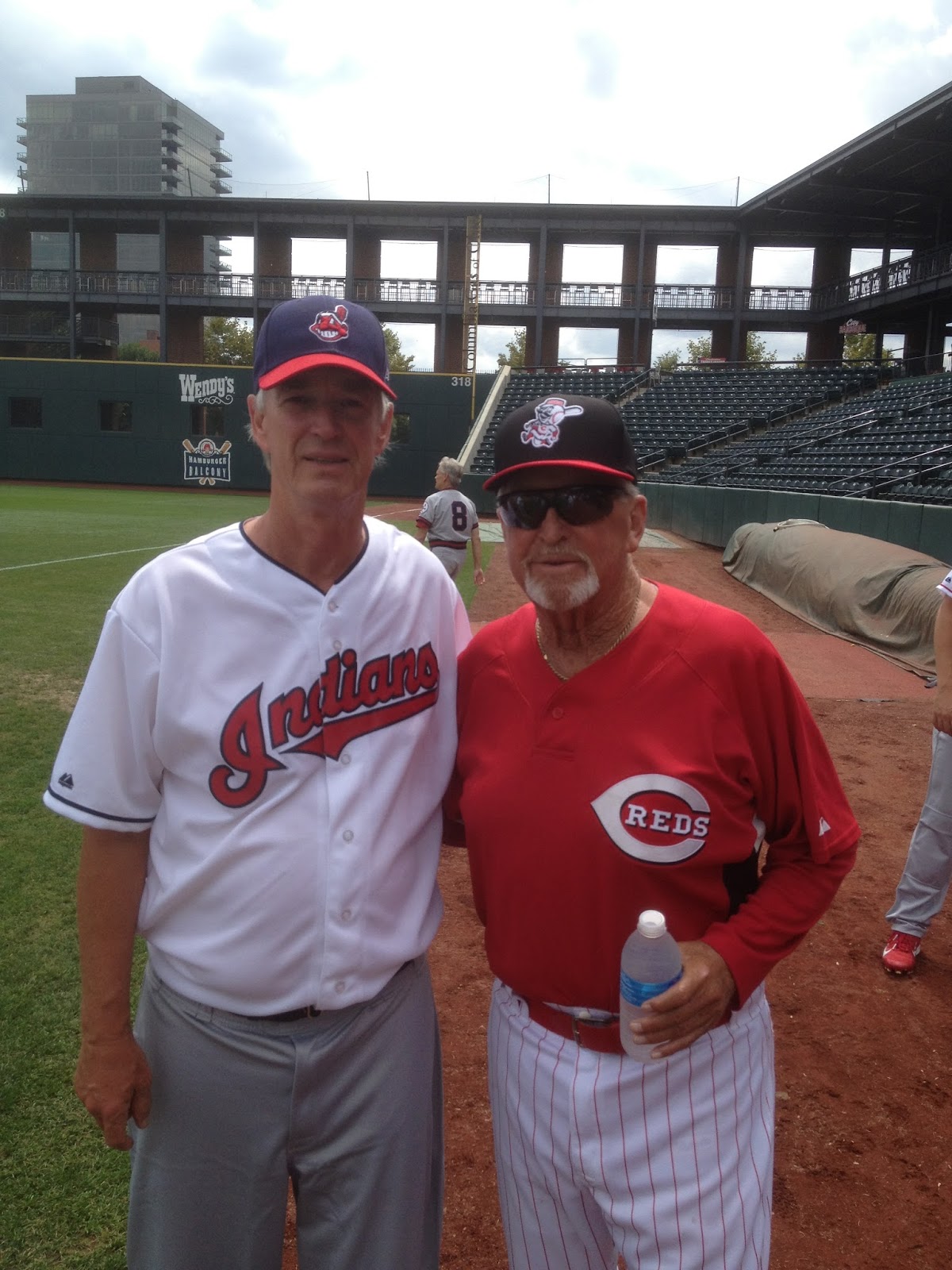
Buck:    Two other major leaguers, Tommy Helms, National League Rookie of the Year for the Reds in '66 and Bert Campaneris,  the great shortstop on the 3 time World Champion A's of the 70's  tutored the boys on infielding and how to turn the double play.   Tommy's best tip  to the campers is that, "infielders get more girls! "                      


Bill with Tommy Helms


                                                   Bert Campaneris

McCarver:      Campy  looks like  he could still  make the plays and run the bases. You know he was a 6 time stolen base leader in the A.L.

Buck:     Friday's activities at the park included extensive batting practice under the stands and then on the field against live pitching.


                                            The "Big Bopper" Lee May

McCarver:    Yes.  And Joe , some  of the boys struggled  getting their timing  back. The players ranged from their 30's up to Medicare age. I saw rookie camper  Bill Case, age 64,  struggle horribly against the machine. He missed like 10 in a row. But Lee May, the "Big Bopper,"  gave Bill some advice  that helped him get untracked a little bit.  He told Bill  he was swinging too early, and that he  had to get his weight behind his swing. . And certainly there is weight behind the advice too because Lee May belted  354  homers during his great career.

Buck:    Tim, the campers also were put through their paces by Clippers trainer  Mitch Salisbury  with calisthenics to get the muscles loosened up. Talis told the players at the outset of the camp that, "the trainer will be your  best friend!"  I understand that despite the  range in ages,  everyone got along famously.  And they had the opportunity of dining with the ballplayers every night.  I understand many  great baseball stories which can't be repeated here  were told.

McCarver:  Yes, Case told me that he made friends with the much younger Shawn Jones, who was a camp favorite. Everyone teased Shawn  in batting practice for using an aluminum bat. Like the big leaguers, the boys are using wood. Case also made friends with  two of our  military servicemen , Rod Jones and Brian Heft, both of whom were on the team with him that was managed by Ferguson Jenkins. The Jenkins team played the Barker two games yesterday, so the fellows had a chance to get to know each other and establish some team spirit. Alright Fergie's team - is  still down 7-3 as we head  to the bottom of the 7th.


                                           Bert Campaneris and Lee May

Buck:  Yes,  the players are rarin' to go as  this game winds down. The fans are starting to fill as we get closer to the start of the Clippers game. It isn't just family and friends viewing now. We probably have 1,500 people in the stands.


Bill Case will be leading off the bottom of the 7th for Fergie's team. He has played several innings for Fergie at 3rd base. Handled two chances cleanly ; had a little trouble with one of the throws across the diamond- it's a long way when you haven't made it for over three decades.


Bill patrols 3rd base for Fergy's team

McCarver:  In his first trip to the plate, Bill hit a roller out toward second. It was bobbled several times. On the  throw, the first baseman dropped the ball before picking it up. Despite all the mishandling, Bill was still out on a close play. The speed simply is not there anymore. Fergie with his friendly abuse pointedly asked Case, "Why weren't you  running down the line?!"   But sad to say, Case was giving it all he had. I would say Bill has "Peggy Lee speed!"  What was the name of that song she sang?  Wasn't it  "Is that  all there is?!"

Buck:  Wait!  What is going on here! Case is due up to bat but he is posing with his groupie-wife Lisa in the stands!  Tim, that is taking the fantasy way too far! And Case's other fans  Deb, Brett, and Dar , seem to be enjoying his antics.


The umpire has  told  Case to stop his schmoozing and get to the batters box. So now it appears  we are ready for action. And Case stands in. Catcher Matt Habash waves centerfielder Shawn Jones to move way in. There is no respect on the Barker team for Case's power.


                                 Shawn Jones flanked by  ex-Indians Len
                                         Barker and Joe Charboneau

McCarver:   Joe,  there is absolutely no reason why there should be any respect  given. Case has barely been able to hit the ball out of the infield  to date.

Buck:    The pitcher is ready. Case swings!  A  drive to right!  It is going to fall in. I don't believe it! The veteran has turned back the clock and  started the rally with his single to lead off the inning.


Bill Case  preparing to lead off with a single

McCarver:  Hold on! They are are stopping the game. Talis's assistant Alan Rubin is retrieving the ball. It is going to go in Case's very small trophy case to commemorate his unlikely hit!

 
Alan Rubin   
                
Okay, that is the end of the fantasy broadcast. Fergie's team did not take advantage of my timely single, and we lost 7-3. But it was a wonderful experience.  This is one time when the old baseball cards came to life. What  made the camp special was that all the major leaguers gave of themselves, and enjoyed the experience as much as the campers. Mike Talis has chosen the most amiable  stars  to enhance the experience. Lee May said it best when he remarked at the closing ceremony that he  always looks forward to the camp with anticipation, and that Mike is the best "ringmaster"  of all the fantasy camp operators.  I could readily see why the guys come back year-after- year to savor this big league experience.
I must say the experience had me harkening back to my youth when  I was  12  playing for my hometown  Hudson Hornets. Like many  kids my age, I dreamed that  one day I  would  make my way to the big leagues- maybe even  play for my beloved Indians!  Well the dream ultimately faded,  and none of that happened.  But thanks to the Clippers Fantasy Camp,  and my good friend Mike Talis,  I (1)  got a chance to don the Tribe uniform and play ball again with big leaguers on hand;  (2)  did not get hurt;  and  (3) managed to stroke a base hit  in the big Sunday finale.  That was more than enough to call the experience a success.


12 year old Billy  Case  Hudson Hornet second baseman - 1961-argyle socks were not regulation

Saturday, July 20, 2013

BILL AND LISA VISIT A QUARTET OF RHODE ISLAND ROSS COURSES

    On Friday May 10th, we bid an early morning farewell to Newport's Ivy Lodge, and drove north to Rumford, an eastern suburb of Providence. Our  destination was Metacomet Country Club, a 1925 Ross design.  Metacomet, like the other Ross courses we visited in Rhode Island has a  storied past. The likes of Gene Sarazen, Bobby Jones, and Glenna Collett Vare strode these fairways in the "Roaring 20's."  Metacomet (named after an Indian chief who befriended the Pilgrims) reminded  Lisa and me  of Granville Golf Course in Ohio which is one of our favorite Ross courses.  Like Granville,  Metacomet features lots of undulation with  significant elevation changes on the shots into the greens making club selection difficult.
     The highlight of our game  was playing with a delightful couple from Chapel Hill, North Carolina, Karlton and Staci Creech. Karlton is the Assistant Athletic Director at the University of North Carolina  while Staci teaches. Karlton is a solid 7 handicap but it is Staci who is the star player in the family. One look at her textbook  swing (honed by fomer tour player Jim Ferree) confirmed   she had indeed played college golf with the Tarheels.  I cannot  recall a missed shot by Staci during her round.
.


Staci and Karlton Creech

On Saturday, we played venerable Rhode Island Country Club designed by Ross in 1911. We were greeted by a thundershower, and we donned our rain suits. We were  beneficiaries  of another great pairing: former Ohio Women's Amateur champion Alison Reifers (and mother of Kyle- a current tour player) and Steve Kress.


Rhode Island C.C. clubhouse


Bill with Alison Reifers and Steve Cress
   
                                                                
                                               Yawning fairway bunker at R.I.C.C.    

     The rain did not adversely impact our enjoyment of this immaculately groomed course. RICC features a mix of parkland, woodland, and seaside holes. The final four are hard by Naragansett Bay. I snapped the picture below of  Alison who with her classic swing  played an  excellent shot on the par 3 17th.


The Society's annual meeting followed at the club after dinner. The Society has a relationship with the Tufts Archives which houses many of the original Ross course design drawings at its facilities in Pinehurst, N.C. Audrey Moriarty, the Archives' executive director brought the Society up-to-date on the ongoing effort to digitize the archives.
       Our Sunday game was played at Little Compton's Sakonnet Country Club. This area of Rhode Island is chock full of visual appeal. Charming seaside cottages, many held by  families for generations, are in evidence here. One of those cottages was Donald Ross's summer retreat.  A current generation of the Ross family still owns the cottage, and they were gracious enough to host a brunch for the Society prior to our round at Sakonnet.

                                                    
                                                                Ross cottage

We loved all of the Ross courses we played in Rhode Island, but Sakonnet C.C. was particularly special. Another great combination of seaside holes coupled with bucolic marshland characterized this Ross design. The clubhouse was Lisa's favorite on this trip. Our convivial foursome was completed with Tennessean and Society president Mike Miller,  who played to a very low handicap, and Shawn Pierson from Sarasota.


Lisa on Sakonnet's putting green

As was the case with   Point Judith, we encountered several stone walls flanking the fairways on the holes close to the water.  We faced strong breezes in our face when playing toward the water as was certainly  the case on Lisa's windblown tee shot below on the par 3 2nd.


The  drivable  par4  17th  was a noteworthy hole with its rocky outcroppings threatening any off-line shot into the green. The mix of Sakonnet's s entertaining and scenic holes proved testament to the fact that a course's  lack of length  is no barrier to a wonderful and challenging golf experience.


Outcroppings on the 17th


Bill, Lisa, Shawn Pierson, Mike Miller


Shawn Pierson

                                                                 
                                                     Bill tees off on Sakonnet's 3rd hole


Sunset at Sakonnet C.C.
                                                                             
     A distinct  advantage of joining the Donald Ross Society (www.donaldross.org ) is that its  members are afforded the opportunity to play courses that would otherwise be extremely difficult to access. Also, you meet kindred spirits who share your love of the game.
     Our final game was held at the 1914 Ross design, Wannamoisett C.C. in East Providence.  This club held  the 1931 PGA Championship, and still hosts the Northeastern Amateur, previously won by the aforementioned Kyle Reifers. Wannamoisett  presents  a scorecard anomaly. Despite the fact that I played it at only 6400 yards, there were 8 par 4s measuring over 400 yards on a par 69 layout. We played with Marla Flinn, a fellow Ohioan who is a fine player.


Marla Flinn at Wannamoisett


Friday, July 19, 2013

LISA AND BILL JOIN UP WITH THE DONALD ROSS SOCIETY- Newport Country Club

    Lisa and I have enjoyed some memorable  times at events sponsored by  golfing societies including the American Seniors Golf Association (ASGA) and the James Braid Society in the U.K.. When we got wind of the Donald Ross Society's  planned May excursion to five notable  Ross courses in Rhode Island, it was time to join this society too. The mission statement of the Ross Society states that its purpose generally  is "to recognize and safeguard the integrity of courses from the 'Golden Age' of golf course architecture," and in particular those of Donald Ross- arguably  the greatest of all golf  architects.
     May 9th marked the first day of this event. A brief five minute drive from the Ivy Lodge  brought us to  historic Newport Country Club's entrance.  This is the ultimate blueblood club. The Astors and Vandberbilts were among the founding members. To say that the 1895 Whitney  Warren designed Beaux Arts clubhouse is an eye catcher  does not remotely  do it justice. It is really an architectural jewel box!


Jongleux, Case, and Callahan into the mist

We  explored  the interior of the clubhouse. Many relics from the club's early days were on display. The club has every right to be proud of its history as the  first U.S. Open and U.S. Amateur were  played here in 1895.  Our golf professional at Brookside in Columbus Brad Zeitner,  who has visited the course many times,  points out that you could actually watch the America's Cup races from the second floor locker room. After getting our bearings, we met our two assigned  playing partners for the day, Jack Callahan from Easton, Pa.  and Dave Jongleux, a CPA  from Indianapolis  and a strong player. The daily rounds we played with the Society had a friendly competitive aspect  in which  we counted the two net better balls of our four players on each hole. The heavy fog rolling in from Narragansett Bay enveloped the course during our front nine. After a brief rain delay on the back nine, the fog burned off and we finished our game in brilliant sunshine. The beauty of the venerable layout was finally  revealed in full.  Seascape views of the bay  coupled with rolling meadowlands satisfied our visual appetites.


The privilege of playing Newport would have sufficed to make this a memorable day. But there was more! One of the Society members treated us to  a sumptuous luncheon and cocktails at his mansion "High Tide," also built by Whitney Warren in 1900. This afforded us an opportunity to make friends with the other members. We encountered  an interesting array of folks including golf writer and historian Michael Fay, a couple of refugees from hickory golf club societies, and former Ohio Women's Amateur champion Alison Reifers.
  

High Tide Mansion

Our stellar day was concluded with a tasty lobster dinner at the Bristol Yacht Club. After dinner,  member Shawn Pierson  made a pitch for assisting the renovation of the Bobby Jones Golf Course in Sarasota, Florida- a muni course designed by Ross. This is the type of project in which the Ross Society takes great interest. Our stint with the Donald Ross Society was off to a flying start!


Bristol Yacht Club 


                                Newport C.C. provided us  all the amenities